Tuesday, October 26, 2021

Gotland Sheep - Breeding Stock Available


Back in 2017, we began our Gotland sheep adventure, and since that time we've learned so much about this amazing breed but also have so much more to learn.  We began this adventure with 3 ewes and 1 ram and this last spring we produced 12 lambs.  Out of those 12 lambs, 9 of those are ewes, and that is pretty amazing!  Fall of 2020 we purchased a new ram from Carol Ronan out in Oregan.  This ram is Halvard the first place yearling ram at the OFFF show in OR (the largest Gotland sheep show in the USA) Halvard is a high percentage Gotland with a long line of Swedish genetics.  He made the long journey across the US and decided he was ready to meet the girls as soon as he pulled in the driveway.  Our plan was to give him a week of rest after his long travel and allow him to adjust to his new surroundings.  But Halvard had other ideas, he jumped the fence and went straight for the girls.  He has since learned what a hotwire fence is for.  Halvard produced some lovely, healthy, fast-growing lambs.  Pictured above is one of his beautiful silver ewe lambs from this spring.


Gotlands are a multi-purpose breed, growing very quickly they can reach ideal slaughter weight at 5-7 months of age.  Their fast-growing fleeces can grow up to 12 inches of fleece per year and are perfect for felting.


Don't forget they also make the most beautiful pelts I've ever seen!  This amazing multi-purpose breed creates very mild meat (tastes nothing like the junk you can purchase in the store) lots of lovely fleece.  And soft, shiny, curly pelts.  Oh and don't forget the ewe's almost always produce twin lambs and can produce triplets and quads.


Last year I sent 2 fleeces off to be milled and made into yarn and roving.  It took almost a year to get it back, so it is a long process but I was super happy with the results.  We used Round Barn Fiber Mill in Durand IL.  They're super helpful, prompt at answering all questions, reasonable prices, and produce a nice yarn that I can now sell in my Etsy shop and website or hoard it all for myself.

Since each sheep is a different color they can produce some beautiful shades of grey.  You can also have the yarn-dyed any color you would like.  We just had our fall shearing so I have lots of fleece needing milled.  If you're interested in purchasing a raw fleece drop me an email.  You can also find raw fleeces, yarn, and pelts (when we have them) listed in my Etsy shop ChickenScratchStore


Does the current state of our nation have you concerned or thinking about a need for becoming more self-sufficient?  I can tell you from the phone calls I receive from customers you are not alone.  People are moving quickly in a direction to becoming more self-sustainable.  Why are sheep a good meat choice?  Gotland ewes are easy to lamb (I haven't had a ewe need my help and I've had them 5 years).  They almost always have twins.  The lambs grow quickly on pasture only.  Gotlands are smaller and easy to handle than most meat sheep.  So if you might have been thinking, "honey we should get some cattle so we'll have a meat source" did you know it can take 2 years to grow out a calf?  Plus they need much more pasture and grain.  It might be a good idea to consider Ovine instead of Bovine.

Although Gotlands do love a little grain from time to time.  If you give them a little they'll follow you to the ends of the earth if you just shake the bucket with a little grain in the bottom.
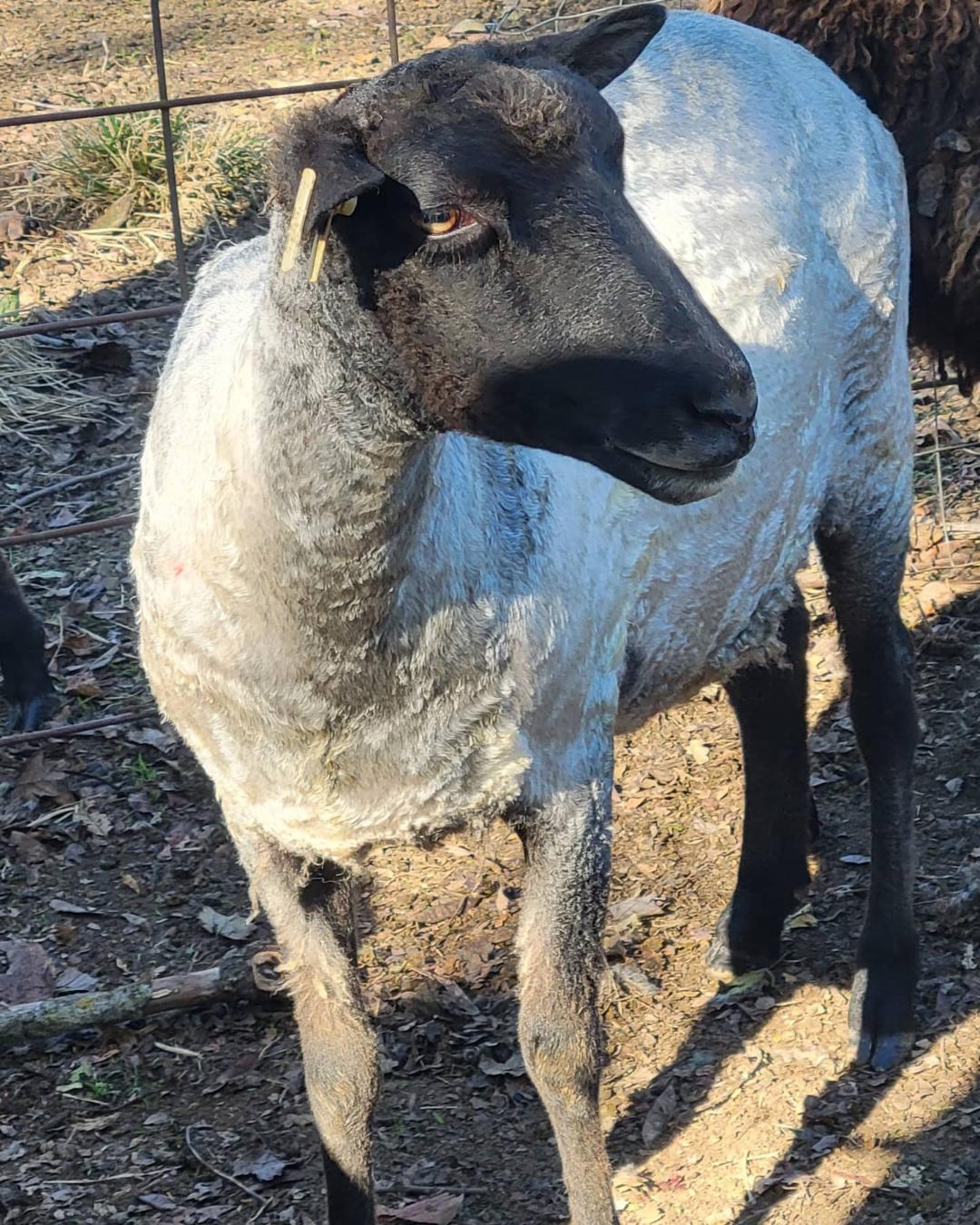


look at her shine!  If you're interested in a small starter flock, drop me an email or give me a call.  

Have a Blessed day!

Angie


Wednesday, October 20, 2021

F2 Olive Egger - Color Scheme Of Green


 A couple of years ago we decided to go the next step with our Olive eggers and produce the F2 Olive.  Waaaaay back 13 or 14 years ago we produced the first Olive eggers way before the big hatcheries ever dreamed of producing a green egg.  We began selling Olive Eggers from our website and at that time we told our breeding strategies.  Now fast forward to 2021 and every hatchery big and small in the US has now copied our recipe.   We have always produced the 1st generation due to barn space and to be honest I was always really satisfied with the 1st generation so I went no further.  A couple of years ago I decided to give it a try and started off small with a couple of well-chosen hens. 

The cross doesn't always produce wonderful puffy cheeks but when it does it makes me happy.  what I have also discovered is that not all of the F2 will lay the green, some do revert back to the brown egg.  I've not yet figured out the percent that will lay the green egg.  So when purchasing the F2 Olive it might be best to purchase a good amount of the chicks so that you have a better chance of getting that nice bronzy green egg.  


Some of the F2 Olive eggs are a wonderful grey tone but under that wonderful grey bloom is an amazing Army drab green.  You military folks will know the color I'm talking about.


By choosing my darkest green egg layers and those with the certain characteristics that I like to see in an Olive Egger Hen, sacrificing the barn space has paid off.  It can take a good couple of years to know if you're heading in the right direction.  Probably one of the biggest problems that I have is, I don't hold back enough of the stock that I produced to see what the majority of the egg production will look like.     


Although what I've seen I like!  And I like it a lot!!

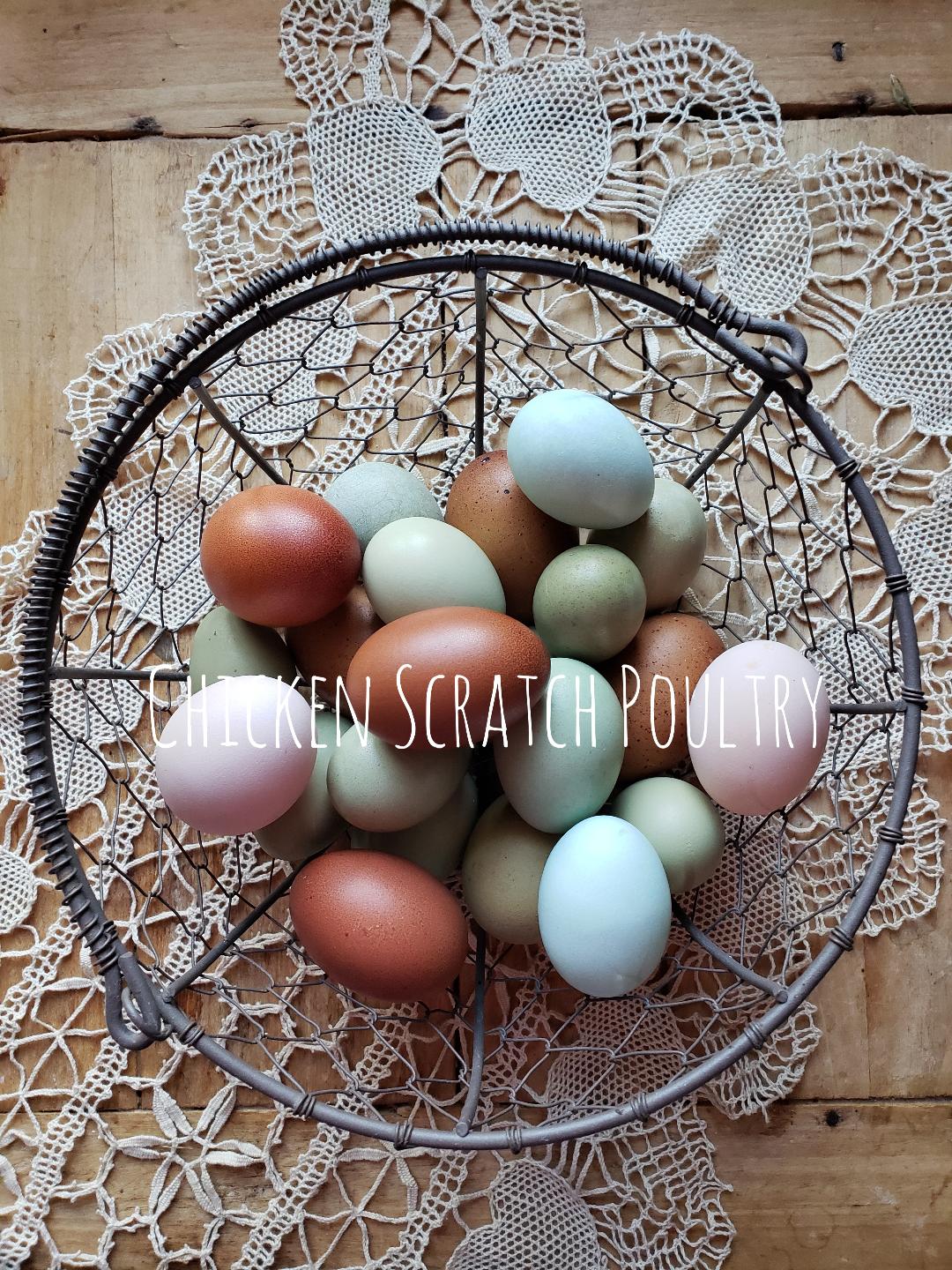
Check out that chocolate chip coating.  Is that not lovely?  Chickens can create some amazing shells with their coloring capabilities. 


The photos here in the snow are F1 Olives in the front and F2 Olives in the back.  No enhancements or filters on any of myphotos.  Did you know that you can't trust anyone's photos anymore?  It seems no one can share a true un enhanced photo.  If they're product must be enhanced is truly worth having?  I honestly can not say that every chicken is going to produce exactly what we want, we're manipulating and crossing them in hopes of getting something wonderful.


This is not a very good photo, I'm trying the capture the bronziness of the F2 Olives compared to the F1 Olives.  The F1 is the bottom row of eggs.


Have a wonderful blessed day and bottoms up!!

Angie The Chicken Tender


Thursday, July 29, 2021

Sour Crop Prevention And Treatment


I received a message from a very concerned friend today.  He had purchased pullets a few weeks ago and noticed this morning that his Lavender Orpington was not acting normal.  She was a bit sluggish and just sitting around.  Upon further investigation he picked her up and noticed that her crop was swollen, gurgling and squishy.   He inquired as to what I thought might be wrong with her.  My first question was, have you fed her a lot of grass lately?  He said funny you ask that, I mowed the yard and  spread a bunch of grass clippings in their run, I thought they would enjoy that.  I knew instantly what was wrong with his little hen, Sour Crop!  When you pick grass for your hens or throw a bunch of clippings into their pen, they can over eat on the grass. When you pick or cut the grass for them they eat pieces that are much bigger than if they were nipping it off themselves, it can cause impacted crop or Sour Crop from the grass making gases and fermentation.  I've heard from several people over the years who say what's wrong with my hen, she won't eat and her crop is full.  Come to find out, their kids love to pick grass to feed her.  I know it's fun for kids but it can cause much discomfort for your poultry and in sever cases even death.
Allowing your poultry to free range and pick and nip their own pieces of grass is not a problem and it's good for them.  The problem happens when we pick large handfuls of long grass that is tough and fibrous or dump a huge amount in the chicken run when they don't normally have free access to grass.

(you can click on the highlighted links to purchase the products from Amazon that we use on our farm)


So your chicken has Sour Crop now what??  It's a good idea to separate her or him from the flock for a couple of days, take away the food for a day.  In one gallon of water put 2 tablespoons of Apple Cider Vinegar With Mother.

This procedure is also a good preventive for Sour Crop.  Put 2 tablespoons of Apple Cider vinegar in your water everyday.  Sour crop occurs when there is a disruption in the normal microflora in the crop, usually because of a change in the PH of the digestive system.  Offering them an overload of grass clippings when they don't normally have access to free ranging can mess up those delicate PH levels.


Another product that I use and 
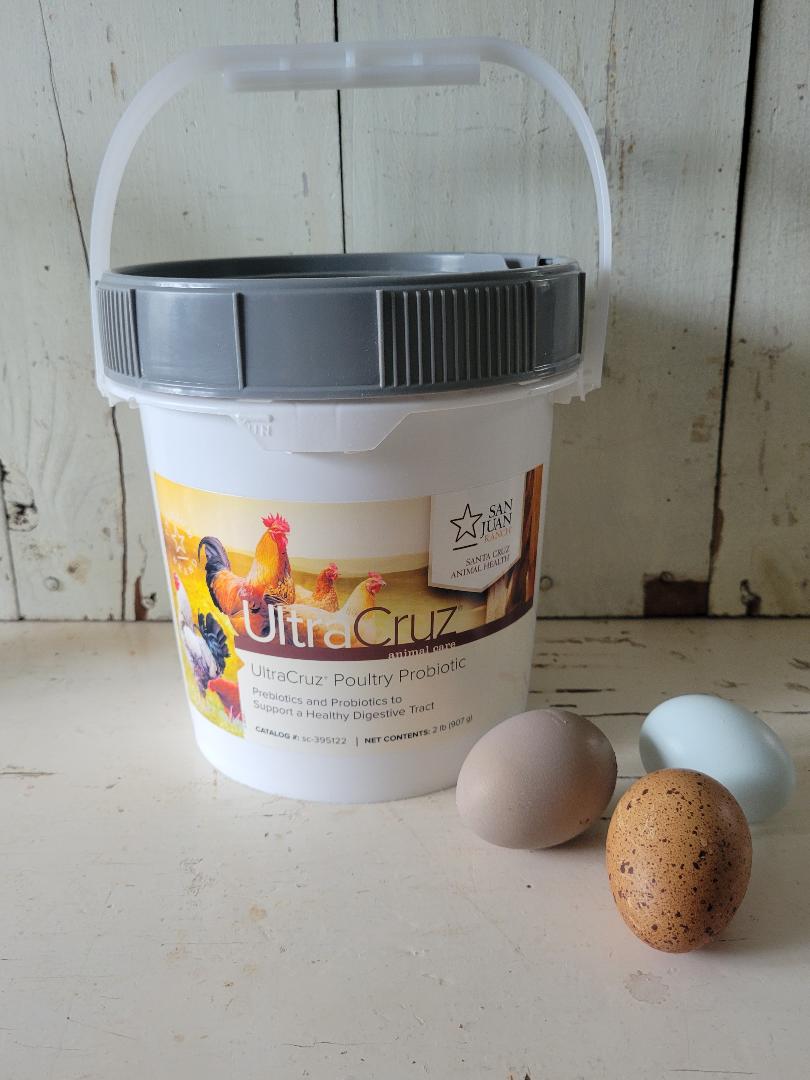
recommend to help prevent Sour Crop is UltraCruz Poultry Probiotic.  It comes in a large pail and lasts a long time.   It's also great to use if  you've administered an antibiotic, it has live natural occurring microorganisms.  It not only has probiotics but also prebiotics to help maintain a healthy digestive system in your poultry.  This product is added to the water.  If your using this product in your water don't add the Apple Cider Vinegar.  It's probably not a good idea to do both at the same time. 

Yes, that is a lovely grey egg in the photo, courtesy of my F2 Olive egger :)


If you have a chicken with Sour Crop and you don't see improvement after two days it's a good idea to seek your vets advise he/she my need to prescribe Nystatin or fluconazole for antimicrobial therapy.  Use your best judgment, sometimes it's best to start with the Veterinarian first.

Hope your having a fabulous summer and don't pick grass for your chickens let them pick it themselves :)  I hope this is blog is helpful.


Blessings!
From the Chicken Tender of Chicken Scratch Poultry.
Angie


Saturday, March 21, 2020

Heritage Rhode Island Red - New Breed On The Farm


Hello chicken loving friends, it's been awhile since I've sat down and wrote up a blog but with all that is going on in the world with the Covid-19 virus I just wanted to sit and reach out to whoever might be searching for poultry in this uncertain time we're all experiencing .  I can't begin to tell you how many calls I've received from frantic people searching for information and advice.  Almost every phone call begins with I'm look for hens that are laying eggs now.  Most of the people calling at this time know nothing about chickens but they're feeling the need to be more self sufficient.   Anyone can raise chickens, they aren't difficult but you need to know that it's a commitment just like any other animal.   If your looking for a heavy egg producer we have, new to the farm this year, the Heritage Rhode Island Red.
 
This breed has been a nice addition and fitting into the farm very well.  If you don't know much about the Heritage Reds Here's a little background.  The first Rhode Island Reds were created back in the second half of the 19th century, not by poultry fanciers but by farmers needing a dual purpose chicken.  They used selective breeding from breeds such as Cochin, Java, Malay, Shanghai and Brown Leghorn from Italy. 
The first breed standard was drawn up in 1898 and was approved by the American Rhode Island Red Club in Boston in 1901.  The Single-comb variety was admitted to the Standard Of Perfection of the American Poultry Association in 1904.
The color of the Rhode Island Red is a lustrous deep mahogany red and the tail is mostly black.  The comb may be single or rose comb (we are breeding single comb) it is vivid red and earlobes and wattles are also red.  They have red-orange eyes and yellow feet and legs.

The body shape of the Heritage Rhode Island Red is much like a brick :)  They have a long, flat, wide back and broad rounded chest.  Hens can weigh 6 pounds and rooster 8 to 9 pounds. 
I have found the hens to be very calm, not afraid to be touched, easily handled very friendly not flighty even though I've not really hand raised them.  The roosters have not been aggressive and are well mannered while I'm gathering eggs (so far so good).
Did you happen to know that the Heritage Rhode Island Red is on the Livestock Conservancy watch list?  The large hatcheries have basically bred them out of existence.   The  hatcheries today are producing a Rhode Island Red that is aggressive, smaller, wrong color and no longer resemble the true breed.     

The Heritage Red hens are very good layers of large brown eggs, they still have their chicken instincts, that means they can go broody and hatch chicks, production Rhode Island Reds can not do this.  The Heritage Reds are very hearty, robust gals and produce large, lively chicks.  I've read that they can turn meager amounts of feed into lots of eggs.  Everyone gets fed really well here and they're producing tons of eggs :)  My hens began laying at 5 months of age and each hen will lay one egg per day.


We're just beginning with the Heritage Rhode Island Red, I'm going to be working with two different bloodlines and see what each has to offer.  Let's all work together to help this breed it would be a shame to let Americans chicken become lost forever.  Breeders of the Heritage Rhode Island Red are difficult to find but there are a few out there.
If your considering having a couple of hens in your backyard and your looking for one that's a good egg producer I recommend giving this breed a try.  We sell them as day old chicks and started young pullets.

Have a great day and stay safe.
Angie

Monday, December 2, 2019

Cyber Monday Sale!! - Free Shipping


Happy Cyber Monday!!    Orders placed today will receive free shipping.  Just order 16 or more day old chicks, place your order today and your chicks will ship to you in the spring with free shipping. Come on over to Chicken Scratch Poultry and make your spring chick wish list.  We have several new breeds to offer this year.  Chickens are the perfect gift that keep on giving :)


Tuesday, March 26, 2019

Poultry Nutrition - Nutritional Needs For Juvenile Poultry


Today I'm going to cover the nutritional needs of young juvenile birds.   Let's say your chicks are 7 to 8 weeks old and have graduated from the brooder. They no longer have a need for a heat lamp or any source of heat and they're old enough to venture outdoors into the warm sunshine to scratch around in the dirt.
At this age we're still feeding a chick grower feed that is medicated.  This is very important if your juveniles were not vaccinated for Coccidiosis as day old chicks.  If your chicks were vaccinated then there is no need for medicated chick feed.  Coccidiosis is found everywhere just like bacteria is found everywhere.  Your chickens can be fine when you put them in the coop for the night and dead by the next morning. Coccidiosis can happen just that quick.  Signs to watch for are chicks that are lethargic, puffed up with ruffled feathers, acting cold, loss of appetite and blood or mucus in feces.  Keep in mind medicated feed is NOT medicated with an antibiotics. The feed has a medication called amprolium and it prevents and treats a harmful microscopic protozoan parasite.  Springtime has the perfect conditions for causing Coccidiosis, lot's of rainy, warm, muddy puddles to slurp from.   


It's a good idea to keep medication on hand to treat Coccidiosis, because when you need it you need it now not two days from now.  Corid is something we keep on hand at all times. After treating with Corid it's a good idea to give a good source of Probiotics and we have used Gro2Max for many years now.  It's best to sprinkle it in their food. Gro2Max can also help your poultry feather out faster and grow quicker.


While feeding a chick grower feed do not add grit or calcium to their diet. There is no need, just check your feed bag and it will  have all the ingredients listed on the bag and contains everything they need nutritionally.  If you go and add more calcium to their diet it can be detrimental to their health, too much calcium can cause kidney failure.

Around 7 to 9 weeks of age is a great time to introduce chick treats and one thing we really recommend are Chubby Mealworms, they will almost do back flips for a meal worm. They also enjoy table scraps and those leftovers in the fridge you hate to throw away. The only thing I found that they don't like would be onions, lemons and potato skins.
During these first 8 weeks or so of your chickens life they have already set up the pecking order and they know who the boss of the flock is.  Make sure your flock has plenty of room to roam and keep the boredom at bay to prevent pecking problems.  A couple of good boredom breakers are Forage Cake and Veggie Treat Balls, I really like the Veggie treat ball and have also had several customers say how much their flock enjoys it.


If you have questions about Coccidiosis or questions about using Corid your welcome to email me at larry_angie@chickenscratcpoultry.com

Have A Wonderful Day!
Angie


When you purchase from the Amazon items listed on our blog a very small portion of the proceeds goes to our farm.  We appreciate your support!!


Thursday, March 21, 2019

Colorful Egg Basket - Farmers Choice Of Chicks


Looking for chicks that will produce you a colorful egg basket, let the farmher (that's me Angie) choose your chicks.  For a short time we will be offering this special deal, $160 gets you 16 chicks, shorter wait time, price includes shipping.  If you need them vaccinated it will be an extra $2 per chick.  Each week we have a variety of chicks remaining after filling orders, these chicks a lot of times are some of our most rare and expensive breeds.  We're giving you the opportunity to allow the farmher (that's me Angie)  to fill your box with the breeds she would pick for her own colorful flock :) and you know how I love a beautiful egg and pretty bird!
Several years ago we did a farm mix of chicks and the customers loved getting the mystery box and guessing what breeds they had acquired as the chicks matured.  I've had several people ask when we might offer a mixed box again.


Just think of all the color combinations and beautiful birds you could have shipped to your door!! 

They will all be our pure bred heritage stock and yes we can give you a list of the breeds we put in your box once the chicks ship out.


Pretty pastels...


Rich mahogany reds...


Not sure how long we'll offer the Colorful Egg Basket so don't miss out on this great deal.  Head over to the Website and place your order now.  We look forward to sharing some beautiful chicks with you and just imagine how colorful your egg basket will look in 6 months time.
Have a great day!
Angie


Wednesday, February 27, 2019

Raising Baby Chicks - Give Your Chicks A Healthy Start


My favorite part of my job is calling customers and letting them know their baby chicks are shipping out. It makes my day listening to adults squeal with delight when they hear their baby's are on the way!  Our goal is to produce healthy top of the line chicks that grow into productive poultry.  Our customers often tell me, "those are the most active, vibrant chicks I've ever received through the mail."  That's exactly what I like to hear and I want to give my customers the opportunity to keep them healthy and thriving.

There is nothing more exciting than receiving a box of baby chicks in the mail, but I often forget that sometimes this is likely a persons first time raising chicks and they don't have years of experience under their belt.  So I'm going to pretend that your a  chicken newbie, you just received your first box of chicks in the mail, or you just hatched your first chicks in an incubator.

To be prepared for your chicks arrival, the five most important things you will need are Brooder, food, heat, chick feeder and chick waterer.  Let's begin with the brooder, it doesn't need to be fancy but chicks grow fast so they do need ample space. I recommend 6 inches per bird.  Your brooder needs a heat source. For years we used tubs with a heat lamp. I personally don't recommend those high powered heat bulbs, they get too hot.  It's much better to just use a 100 watt  bulb.  Hang your light on one end of the brooder so that there is a heat zone and a cool zone. If the chicks are too warm they can move to the cool zone.  The temp should be 100 degrees under the light.  Another option for a heat source is a heat plate that the chicks can get under.  Heat lamps can be a fire hazard so the heat plates are a better option.
If you plan to raise chicks every year I totally recommend the GQF brooder, it's equipped with heat, water and wire floors.  You can purchase one level or several stacking levels. With this brooder, the food and water hang on the outside so there is no contamination.  The number one cause of chick mortality is Coccidiosis and that happens when food, water, shavings and poo all become a toxic stew.   If you plan on raising chicks every year it's totally worth the cost to invest in a good brooder.  We found that we have a much, much lower mortality rate when we switched to a brooder with a wire floor and stopped using pine shavings.  If a wire bottom brooder isn't possible for you then only use pine shavings, no newspapers ever and the shaving really needs to be changed out daily.  Waterers must be on platforms to prevent shavings from being kicked into the water but chicks still need to be able to reach the water, this is tricky.

Now let's talk about food.  MEDICATED chick grower starter food is a MUST, you want it to have at least 19% protein.  Why did I put medicated in big bold letters, because this is very important!  If your chicks are not vaccinated for Coccidiosis then you must get medicated food.  Our farm at this time is not set up to vaccinate for Coccidiosis, but we're working on it.  I can't tell you how many times over the years people have called and said my chicks are three weeks old, they've been great until now and suddenly they're dropping like flies.  I ask what kind of food are you feeding, guess what they all say?  They all say "it's an Organic top of the line brand."  Once they get switched to medicated food the problem is solved.  The medication in chick feed is not an antibiotic, it is medicated with Amprolium.

We begin our shipping season each year in April and in every box during the month of April we put in a heat pack and two cups of Boost A Chick hydrating gel.  If a chick gets cold and dehydrated in the mail the first thing that will happen is pasty butt.  That is a condition where the chicks vent is glued shut with poo, it can become a lot of work cleaning those little butts several times a day for the next week or two.  If you've hatched your own chicks and you notice that suddenly some have developed pasty butt it's a sign they have gotten cold in the brooder.  As soon as your chicks arrive in the mail or hatch from your incubator start them on electrolytes in the water. Also cook them a hard boiled egg, chop it up real fine and feed it to the chicks as a preventative.  If your chicks do develop a case of pasty butt, clean the vent area with warm water. I also trim as much fluff away from the vent as possible (so the poo has nothing to stick to) and apply a bit of mineral oil to the vent.

Raising chicks is not difficult and they don't need much other than heat, shelter and food.  Never feed your chicks grit or oyster shell (calcium).  There is no need for grit until they are eating something other than chicken food.
As your chicks graduate from chick food to a layer feed they will have everything they need in the layer feed.  Grit and oyster shell (calcium) is already mixed into your layer feed. There is no need to purchase bags of grit or oyster shell.  Just read the label on your feed bag, you will see that it has everything they need all in one bag.

Spring is just around the corner, so let the hatching and peeping begin!!  Come and join us on our new Chicken Chick Chat group where all of our friends are sharing photos and chicken information.  Feel free to ask questions or share your experience raising chicks.
Have a great day and hope to see you over at the Chicken Chick Chat group!

Angie

We've linked several of our favorite products throughout this post for your convenience. These are products we use ourselves and highly recommend. Purchasing from those links helps with funds to run our farm. If you have any questions feel free to reach out to me or leave a comment!


Thursday, January 17, 2019

Game Camera - What's Lurking Around Your Farm


 What's lurking around the farm? 


Doe getting up close and personal with the camera :)

We like to keep a game camera and move it every few weeks to a new spot on the farm.  We find this beneficial in knowing what kind of varmints are hanging around.  The camera is checked daily and if we see a large amount of raccoons, foxes, skunks, opossum or coyotes hanging around then we know it's time to take measures to insure the safety of our live stock.

Friday, January 11, 2019

Chickens - How To Integrate New Hens Into Your Flock


It's that time of year when folks are thinking about spring and adding some new chickens to their existing flock.  Maybe you have an old flock of girls and they're getting to the age where they just do not produce as many eggs or maybe your just dreaming of adding some new egg color to your basket.  Well, integrating young pullets into a flock of older hens can be tricky, but not totally impossible.

Thursday, January 3, 2019

Lavender Wyandotte - New Chicken Breed On The Farm


 We have a new breed of poultry here on the farm that we're excited to finally share.  We have actually had them since the spring of 2016 when we drove down to Greenfire farm and picked them up, but just as we got them raised up to egg production age, we had an opossum get in their pen and kill all of my hens except for one. 

Friday, November 16, 2018

Birds & The Bees / Hens & Hives / Chickens And Honey Bees


Last week we tackled some much needed bee hive maintenance.  Our hives have always sat back behind the house under some spindly trees.  If you know anything about hives, shade and bee hives aren't a good mix, so we began the task of moving them.

Saturday, September 15, 2018

Fall Mushroom Season - Edible Mushrooms Of Illinois

As the poultry season begins to slow down a little, Larry and I find time to sneak off and do something that we love, forage for fungi.  There is nothing more relaxing than getting into the woods and just start walking.

Yesterday morning, I headed out on the four wheeler to cut Bittersweet to fill orders for my Etsy shop, what a great time to also do a little mushroom hunting.
If you love Bittersweet for fall decor head over to the Chicken Scratch Store and get yourself a bouquet.
While cutting the Bittersweet I noticed all around me growing right in the grass was big beautiful Puffball Mushrooms.

Friday, June 1, 2018

Worming, Ear Tags & Vaccinations - Gotland Lambs


Last week we began the process of vaccinations, worming and ear tags for our little lambs.  We have five Gotland lambs so it wasn't a huge job but it was a learning experience for all of us.  We began the process by fencing off a corner of the paddock with a cattle panel and luring the lambs to the corner so that they were easy to catch up.

Tuesday, May 22, 2018

Coronation Sussex - The Poultry For Royalty


What better way to commemorate the royal wedding than to offer a 30% off sale on the chicken created for royalty so many years ago?  The beautiful Coronation Sussex was created to honor the Coronation of King George.  I like poultry with a history and I think you will too.
This past weekend we watched as the Royal couple Prince Harry and Megan were given the title of Duke and Duchess of Sussex.

Saturday, May 19, 2018

Hive Maintenance - Spring Hive Inspection


I always try and do a quick hive inspection in February just to check and see if all the hives have survived the winter.  To my great disappointment this February I discovered that we had lost two hives over the winter months.  We had a very harsh winter this year but I'm not sure if that had anything to do with the hives collapse.  Our spring came really late and from February until May we lost another hive and back in February this hive looked to be healthy. 

We've now had bee hives for about four years, I think, and we're still learning so much about the bees.  Probably one of the hardest lessons learned last summer was don't add a super (or box) onto the hive too far in advance of them needing it.  It's such a fine line, if you wait too long they feel out of space and they'll swarm.  Last year I'm pretty sure I gave a hive a super before they were ready for it and it gave them too much territory to patrol and it allowed wax months to get the upper hand and take over the hive.  That was my fault and I felt terrible about it.


We opened our remaining two hives today.  It's always necessary to smoke the hive before you begin.  Start by puffing smoke into the hive entrance and wait a couple of minuets before opening the hive.  Once you open the hive then give a few puffs of smoke from the top of the open hive.  Maybe you already know all of this information but there could be someone who doesn't know this.  It's taken a lot of painful bee stings before I was able to convenience my husband of this procedure.  It's much less stressful on the hive and the husband if you use smoke.


The hives seemed to be healthy, they're foraging, capping honey and raising brood.  I did see some queen cells being produced in one hive, so it's looking like they will swarm soon.  I need to keep an eye on them, I would like to catch the swarm and start a new hive.


We added new beetle traps to the hives.  I put 2 in each hive, they work very well.  Fill with oil, I use vegetable, or mineral oil.  The bees chase the beetles around and they run to hid in the holes of the trap and drown in the oil.  Hive beetles are probably our worst problem.  Our hives are sitting in a slightly shaded area and really need to be moved into the direct sun, no shade.  Beetles don't like a hot hive.


We opened the hives that collapsed over the winter just to take a look and see if we could tell what had happened.  Each hive had a full box of uneaten honey, so that tells me that they didn't starve.  Some of you more experienced bee keepers, if you have any ideas for us to check for let us know.  We would love to hear what you have to say.


Hive collapse is a serious problem here in the US and we need to do all that we can to help the bees. 


Share your words of wisdom about bee keeping with us, we would love to hear from you.  I'll leave you with these words that I know to be true.

Proverbs 25:16
If you find honey, eat just enough - too much of it, and you will vomit.

Have a blessed day!
Angie


Thursday, May 17, 2018

Southern Illinois Water Emergency - Rend Lake Water Crisis

Photo credit, Chris Kays for the Southern

A breach in a 36 inch water pipe yesterday evening has shut down water to several cities and towns across Southern IL.  Residents have been asked to conserve water.  Many business, restaurants, hair salons and schools have been closed until workers can create a bypass for one of the three pumps that service our area.   
As you can imagine this has caused much panic and ciaos through our area as people scramble to the stores to purchase every last bottle and jug of water on the store shelves. 

The tiny town of Dahlgren IL, where two of our children live, will have it's water turned off within the next 2 hours and they aren't sure when it will be up and running again.  Would you be prepared in your home if something like this happened?  It hasn't taken much to shut down half of the water in Southern IL.  We've found that we're not very prepared.  We do have a pond for watering the livestock if needed and I suppose we can boil the water for ourselves.  We can use pond water for flushing toilets also.  What would you do, have you even considered it?  I hadn't until now.


As we sat and thought about how to plan for the next couple of days with the water issue,  we know that we must make preparation for our two incubators and hatchers that have a couple thousand eggs in them.  Our incubators and hatchers require a lot of water to keep the humidity at a constant level.  


This might not seem very important to some flocks but these eggs will be chicks and young pullets that will be shipped out for several weeks and months.  So it's important to us.

We'll be setting large pans of warm water in the bottoms of each unit which should keep the humidity at the correct level but will need to be checked often.  Hopefully they'll get the water back up and running before we need to test this theory but it's not sounding like it. 

Take a moment and make a plan today about what you would do if you wake up in the morning and there is no running water.  If you have a pond, do you have a way to filter that water to make it safe for drinking?  If you don't have a pond where will you get water, it's not as easy as just going to the store, keep in mind the shelves will be bare.

All will be good here on the farm with or without running water, I'm assured of that as I keep this verse in mind.

“But whoever drinks of the water that I will give him will never be thirsty again. The water that I will give him will become in him a spring of water welling up to eternal life.” John 4:14  

Have a blessed day!
Angie


Wednesday, May 16, 2018

Boost A Chick Hydrating Gel - Poultry Shipping Gel


Out of complete desperation two years ago I began the process of creating a hydrating gel for shipping our poultry.  We had used a gel that's been on the market for several years now but it just wasn't performing as we needed and we were experiencing high mortality rates with our chick shipments.   We've shipped chicks now for around 10 years and when we first began, the postal system would get them  to their destitution in a very timely manner but for the last couple of years that has all changed and now the postal system gives themselves three days to deliver poultry.   Well as you can imagine that doesn't work out so well for live animals. 

We needed a product that could stay fresh for several days and provide what the poultry needed in the way of nutrition, hydration and beneficial bacteria no mater the age or size of the bird.  I've tested our product for two shipping seasons and made a few changes here and there.  Our mortality rates dropped, which was my goal all along.

Boost A Chick Hydrating Gel can be used to ship all bird species, quail, ducks, turkeys...if it needs nutrition and hydration, then you need Boost A Chick Gel.


The gel product that we used in the past would spoil and smell bad after the first day, I needed a gel that would stay fresh for three to four days in the mail.  I finally achieved that goal, I feel totally equipped and ready for this years shipments.
The gel is easy to use, just mix with water.  We glue plastic cups in the corners of the boxes and the hatch-lings have easy access to nutrition.

You can purchase this product from our website or Etsy shop.  If I never sell a single package I'll still be completely happy using it for my own shipments.  I hate to keep it to myself when I know how well it works and there has to be other small farms that can benefit from this product.


Boost A Chick Hydrating Gel is available in 500 dose or 2000 dose packages.